Why selling through social media eventually stalls
Selling through direct messages works while the order count is small. Then the cost shows up as time: every sale takes five messages and a phone call about sizes, postage and payment options. A store turns that conversation into a page that keeps working while you sleep. The customer sees the price, the available variants and the shipping cost, and orders without you in the loop.
The second issue is trust. A first-time buyer checks whether there is a real company behind the brand: whether the terms and returns policy are clear, whether payment runs through a bank, whether anyone answers email. A store with proper terms, company details and card payments sells to people who have never heard of you. A social profile cannot.
Third, what is not measured cannot be improved. A store records what people search for, what they add to the basket and where they drop off, so after a month you know which product deserves a push and which only occupies stock. Product pages also surface in search by product name, bringing customers who were not looking for you at all.
What the starting price covers
Catalogue, categories and stock
Products with categories, search and filters, variants such as size and colour, and stock levels that drop as items sell, so you never sell what you do not have.
Card payments and cash on delivery
We connect card payments through your bank or payment provider, with cash on delivery as a second option. The contract is opened in your name; we prepare what the provider asks of the site and connect checkout once approved.
Orders and shipping
One place to see every order and its status, with shipping methods and postage rules. Customers are emailed when they order and when the parcel ships, so they stop asking where it is.
Built for search and for phones
Every product gets its own URL, title and description that search engines understand, and the store works as well on a phone, where most buyers arrive. Page speed is part of the build, not an upsell.
Training and handover
We show you how to add products, change prices and track orders, with a short written guide for your team. The full code and every account stay yours.
A nearshore partner for your storefront
We are in Novi Sad, Serbia, on CET, which overlaps the full working day in Europe and leaves North American clients a finished handover each morning. The team is senior only, so the people scoping your store are the ones building checkout. For stores that matters more than usual: payment integrations, tax and postage rules differ per market, and getting them wrong is expensive. We have shipped them before and we test real purchases end to end before launch.
How a store gets built
- 1
Catalogue and payments call
We go through product and variant counts, shipping methods, how you take payment today, and what has to sync with accounting or in-store stock. That defines the scope.
- 2
Fixed quote and plan
You get the store structure, a dated timeline and a fixed price in writing before we start, including exactly what you need to prepare: product list, photos and shipping details.
- 3
Design, build and checkout
You approve the design before development. Then we build the catalogue, basket and order panel, and in parallel run the card payment application, which is the slowest part on the provider side.
- 4
Test purchases and launch
Before launch we run real test purchases, from basket through payment to the customer email, on phone and desktop. After launch we train your team and hand over every account.
E-commerce development pricing
From €2,000
3–5 weeks
Online stores start at €2,000 and typically land between €2,000 and €5,000, live in three to five weeks. Price moves most with product and variant counts, payment methods, and whether the store syncs with accounting or in-store stock. Per-transaction fees and monthly hosting are paid directly to the provider, with no markup from us. You get one fixed quote before work begins.
Starting price. Card processing fees, hosting and the domain are paid directly to the provider.
Get a Fixed Quote →Projects with checkout and catalogues
Pejović Invest for browsing apartments by building and floor, Lux Beauty for appointment booking, and Amadea catering for quotes and enquiries. Different industries, same approach.
 Website
Pejović Invest
A website for a new-build property developer, with a browsable catalogue of buildings and individual apartments that the investor keeps up to date themselves through a CMS.
View Case Study →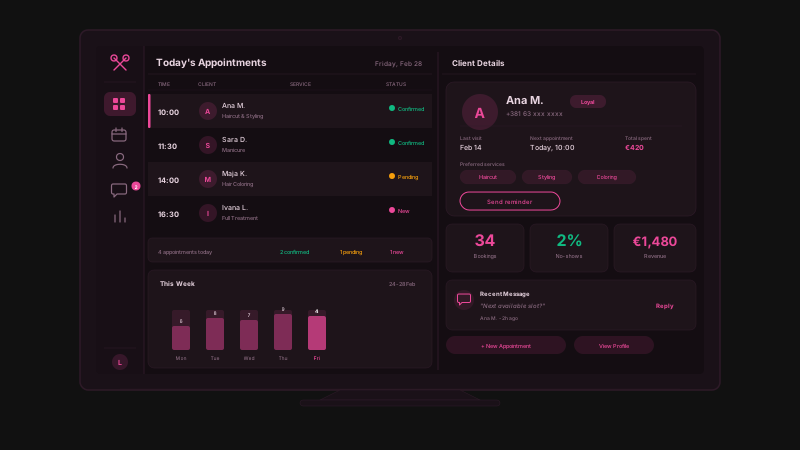 MVP + AI
Lux Beauty
An AI booking assistant for a beauty salon that handles appointment scheduling, sends reminders, and brings back lapsed clients — all via Instagram and WhatsApp.
View Case Study → Website
Amadea
A website for a home-cooked meals and catering service in Zemun, helping Amadea attract new customers for daily meals, family celebrations, and corporate catering.
View Case Study →